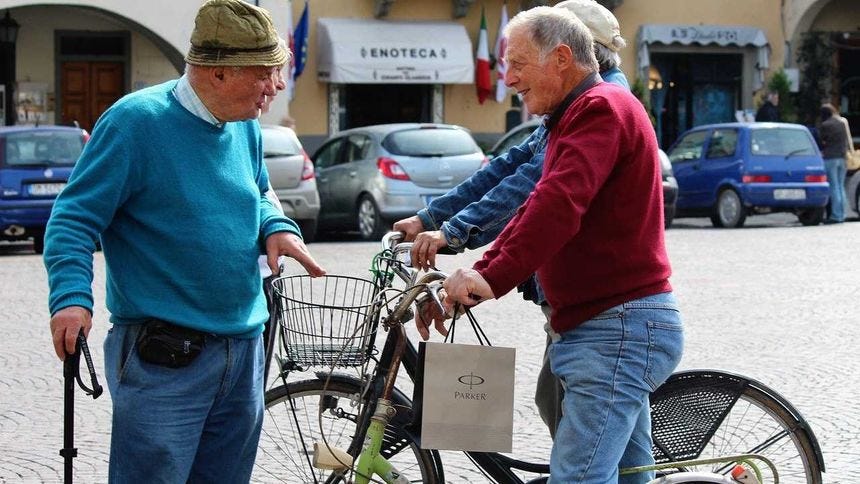
Some words are born in one place and never leave, forever connected to their people, language and geography. Then there are a few very rare ones that start in a city or region and end up colonising the whole planet. Ciao is in the latter group. Today, it is heard in airports, movies, songs, e-mails, advertisements, schools and casual conversation in dozens of nations and is one of the most familiar greetings in the world. Its origin, however, is not generally “Italian” as is often repeated with the usual laziness of centralism. It’s actually a Venetian word.

It was embedded in the urban and social fabric of republican Venice, but also in its linguistic territory. It is one of those cases where the real center of history and the real periphery of today coincide. And, without their knowing it, the word is recognised and used in numerous languages worldwide.
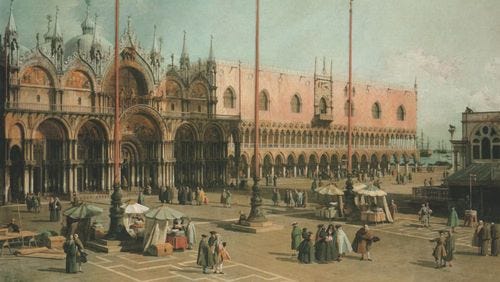
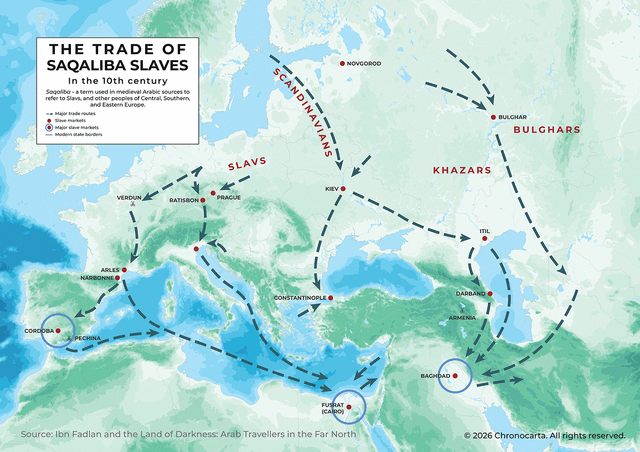
Those familiar with the word’s history know that the modern “Ciao” derives from Venetian forms such as s-ciao or s-ciavo, related to schiavo, “slave.” These in turn descend from the medieval Latin sclavus, originally referring to Slavs before shifting in meaning because Slavic peoples were heavily represented in the slave trade of Late Antiquity and the Early Middle Ages.
Yet the expression “I am your slave” was not generally intended literally: it functioned as a formula of ritual humility, meaning “I am your servant” or “I am at your disposal,” and therefore conveyed respect, politeness and availability to the other person. Over time, this hierarchical courtesy formula was reduced to a short, sonorous and memorable greeting that could travel easily across languages and cultures. The simplicity and informality of today’s Ciao therefore conceal a much longer history of social conventions, urban civilisation and changing relations between status, service and respect.
We should not assume that Ciao immediately became the greeting we know today. For a long time it was considered a characteristic of northern Italy, especially the Venetia-Lombardy area. In fact the term still had a regional flavour even in the 19th century, and written examples of the modern form are from the modern era. This means that the process of Italianization was secondary to the origin of Ciao. Venetia came first. Then came North. National Italy was an invention much later.
The Venetian form “s-ciao”, when it passes through Lombardy, loses the initial s, and becomes “ciao”. Then it spreads through a process of normalisation and simplification, while retaining its Venetian matrix. The precise birthplace of the clipped form Ciao remains disputed. Carlo Goldoni supported the use of schiavo as a deferential greeting; the earliest currently cited written attestations of Ciao itself are from 1818. During the First World War, contact between different Italian populations in the trenches during the war began to spread the term beyond its 19th-century boundaries. The pattern is fairly typical of the cultural history of the peninsula, where a significant amount of creative energy is derived from past regional civilisations and then reclassified and appropriated under more practical national labels.
The real boom came in the 20th century, after the Second World War: mass media, pop music, film, emigration and tourism transformed a regional greeting into a recognisable symbol of popular Italianness. Songs played a key role in this change. Undoubtedly, iconic phrases like “Ciao, ciao bambina” helped to popularise the phrase across the globe and cemented it into European culture and beyond. But it would be a mistake to imagine that the word has become universal just because it is “Italian”. Its perfect qualities of circulation made it world-wide: short, melodic, instantaneous, easy to imitate, free of sounds too difficult for foreigners, charged with a certain Mediterranean aura made marketable by fashion, tourism and cinema.
Ciao then started to appear in other languages and lived a new life. In the Hispanic community it often turns into “chao” or “chau. In Brazilian Portuguese you say "tchau". In English you would usually say "goodbye" to keep its English flavour. But more importantly, it took on the connotation of a smart, informal and a little bit international salutation. It is also interesting to note that while in Italian the word is still used as an initial as well as a final greeting, outside Italy it tends to specialise as a farewell formula. It demonstrates that the term did not merely diffuse after leaving its original context, but instead it transformed, established new equilibriums and was integrated into various linguistic ecosystems. Such is the nature of words that are tremendously powerful.
Many people say Ciao is the most popular word in the world. We don't know if it's true, but we do know that a word born in Venetia has become a permanent part of the international lexicon, and that is a major cultural achievement in and of itself. After all, the story of Ciao is mirrored by the region of Venetia itself: many of the latter’s most important contributions to European civilisation are often anonymous, underappreciated, normalised, and subsumed under more general labels.
This applies to economic practices, urban models, symbols, commercial networks, artistic forms. This is also done with words: the world’s lightest, fastest, and most informal greeting comes from an old system of hierarchy, formality, and service. More than just a curiosity of etymology, it is a tiny example of what Venetia has always been: an independent source of cultural forms, rather than a peripheral part of Italian history as it is often presented today.