

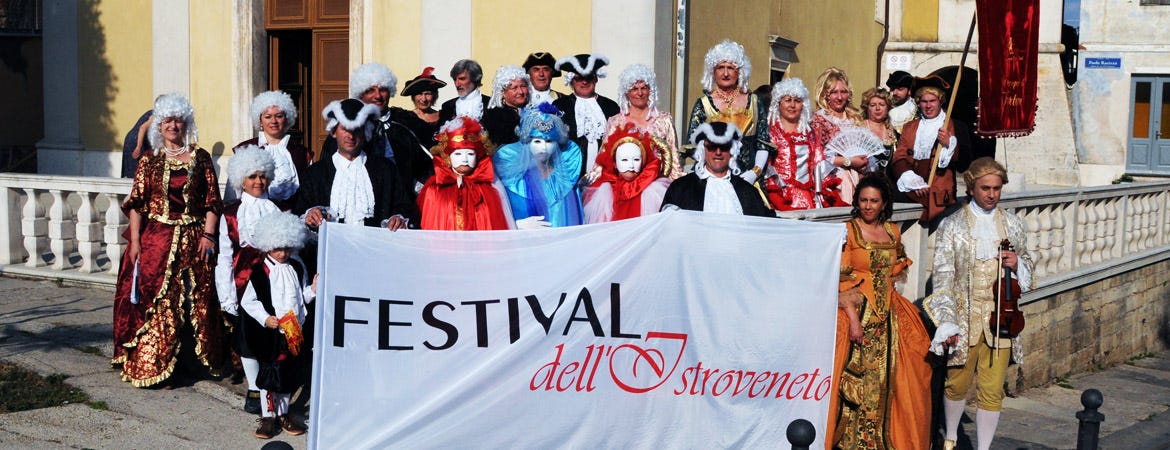
High atop one of Istria’s many hills, the medieval town of Buje - once part of the Venetian Republic from 1358 until its fall in 1797 - transforms each year into the vibrant stage of something unique: the Festival de l'Istroveneto. This is not merely a local celebration, but also a living testament to Venetian culture, hosted in the heart of Croatia, and organized with a level of professionalism that rivals any state-sponsored national event.
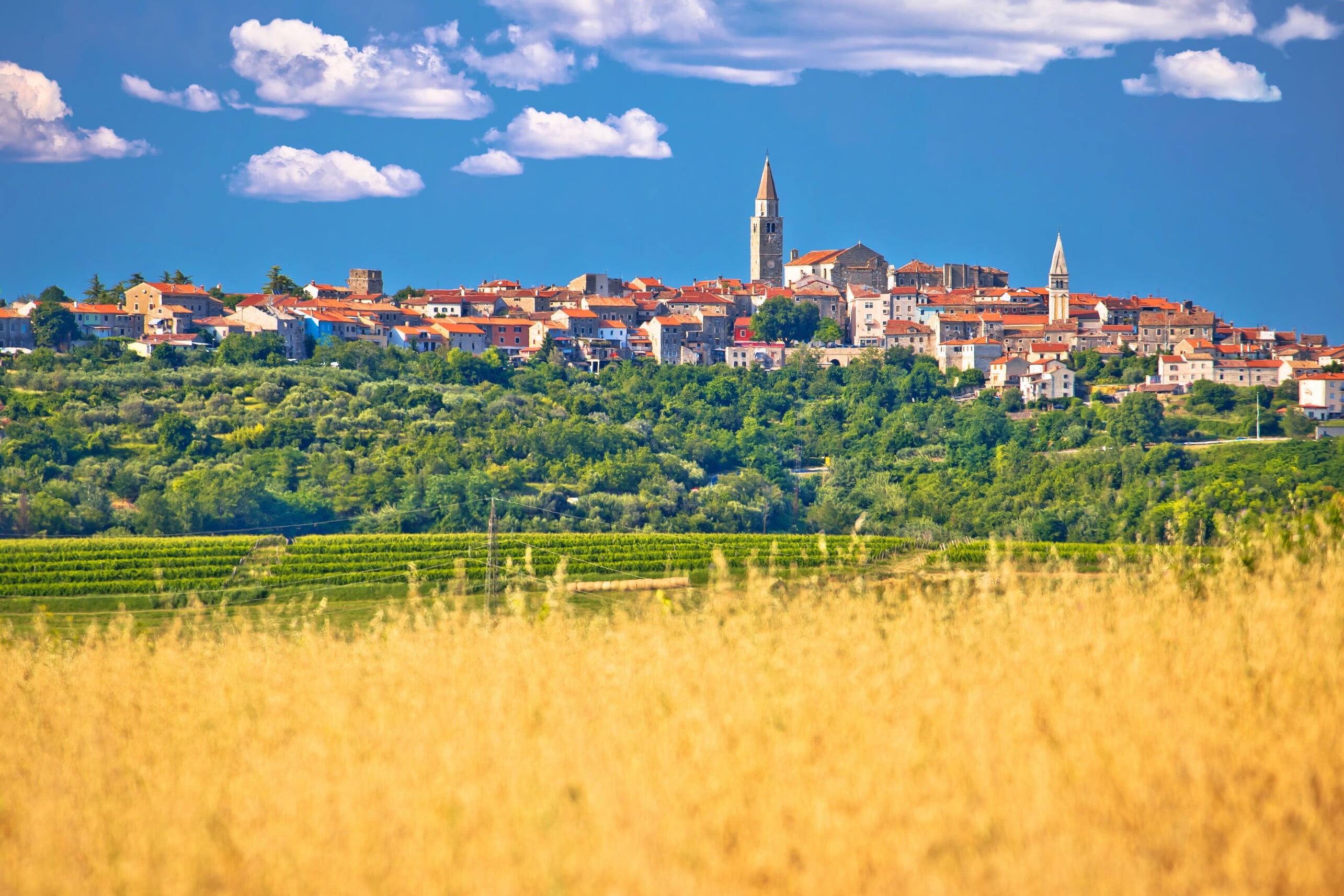
Just a few weeks after Eurovision, Buje welcomes the 13th edition of Dìmela Cantando, the song contest at the heart of this article.
Istroveneto: A Living Language
The festival’s name comes from Istroveneto - also known as Istro-Veneto or occasionally Veneto da Mar - a variant of the Venetian language still spoken along the Slovenian and Croatian coasts. While nearly extinct in Dalmatia, this coastal dialect has survived centuries of adversity, including the repressive language policies under both Fascist Italy and Communist Yugoslavia.
Now in its 14th year, the Festival de l'Istroveneto proves that the Venetian language is not only surviving, but thriving - evolving through literature, poetry, and original songwriting. It goes far beyond a folkloristic revival; it is a vibrant, creative expression of a living linguistic heritage.
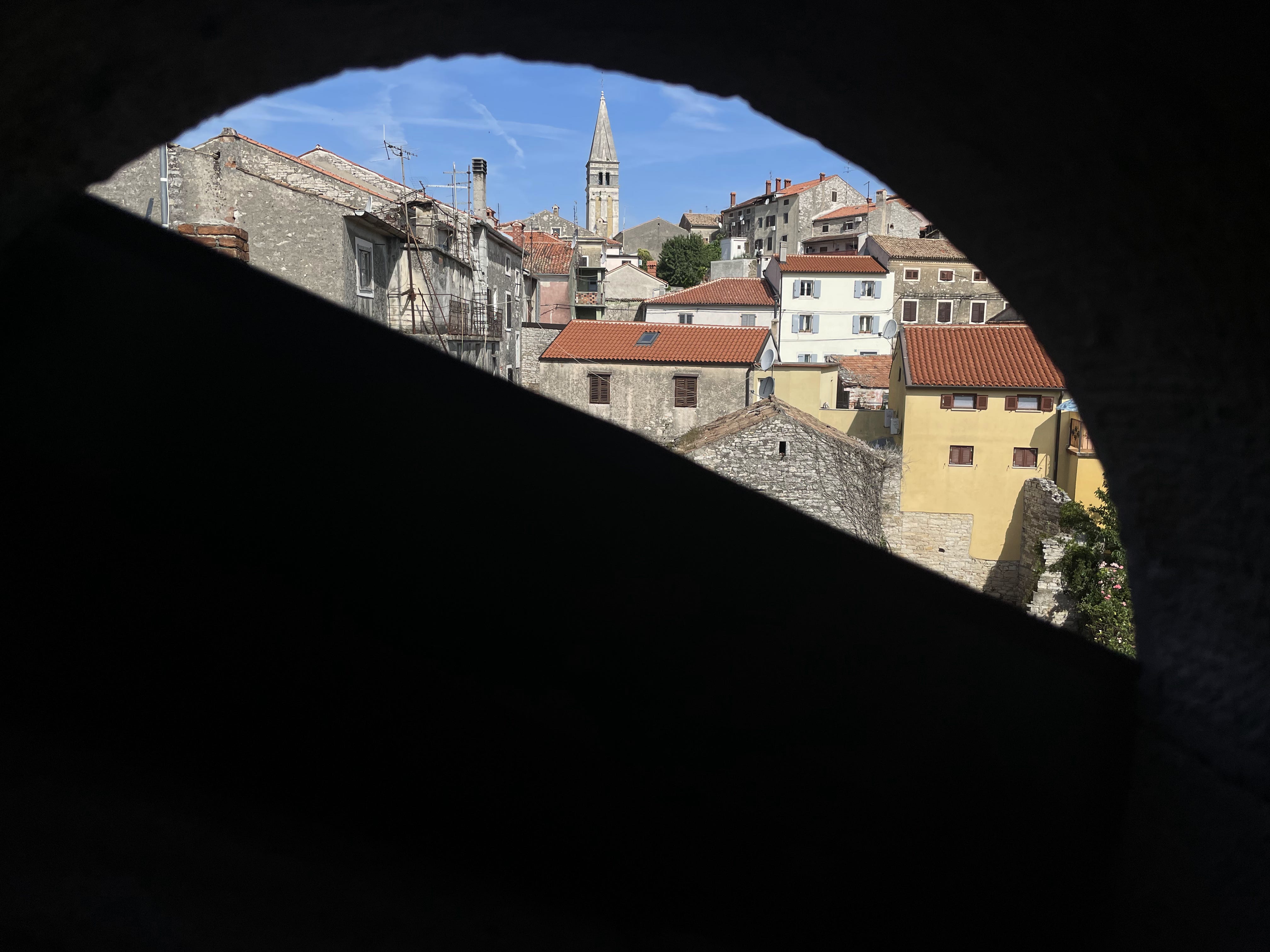
Istroveneto Literary Competition
The Literary Competition is one of the core moments of the Festival. Each year, calls for submissions invite poetry and prose enthusiasts to create stories, poems, and essays. A jury of experts evaluates entries based on linguistic quality, expressive originality, and ties to local tradition. The selected works are published in dedicated volumes, thereby preserving words, expressions, and images of daily life in a region where oral tradition has always held a privileged place.
Video Competition
The Video Competition encourages filmmakers, documentarians, film students, and amateurs to produce short films, documentaries, or video clips that highlight cultural, social, and linguistic aspects of Istroveneto. Submissions can range from mini documentaries about rural communities to creative interpretations of folk legends - always emphasizing the use of the dialect and telling stories often overlooked by mainstream media. Winning entries are screened during public evenings of the Festival and shared online to reach an international audience.
Cultural Programs and Workshops
Throughout the Festival, the squares and cultural venues of Buje, Cao d’Istria, Trieste, and other Upper Adriatic locations host meetings with scholars, philologists, linguists, and representatives of local institutions. Roundtables, conferences, and seminars delve into topics such as the history of Istroveneto, processes of linguistic contact, and strategies for preservation. Alongside these theoretical sessions, practical workshops in reading, writing, and pronunciation are organized for both adults and schoolchildren.
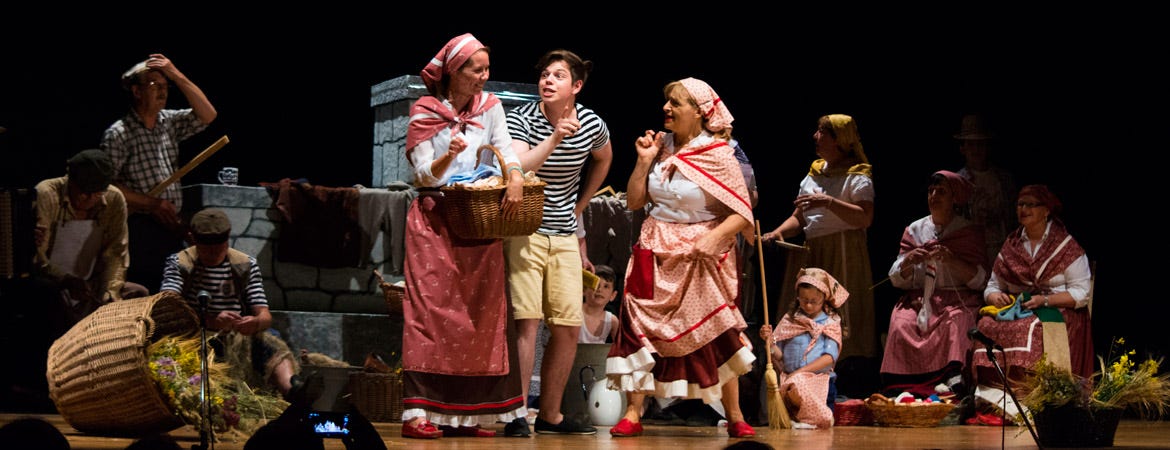
The Song Contest
Dìmela Cantando stands shoulder to shoulder with some of Europe’s most prestigious music contests. More than a local talent showcase, it delivers a broadcast-quality production with professional-grade cinematography, crisp audio, and stage design that, while compact, is elegant and impactful. The lighting, direction, and live energy combine to create a memorable spectacle.
The show’s hosts exude charisma and polish, on par with those of national music awards, and the entire program is conducted in the Istrian variety of Venetian. A panel of judges, along with audience voting, ensures a dynamic and fair competition. In addition to the main prize, the contest awards distinctions for Best Lyrics and Best Original Composition, encouraging excellence in both music and poetry.
The Dìmela Cantando contest proves that quality music and cultural depth can flourish well outside the mainstream.
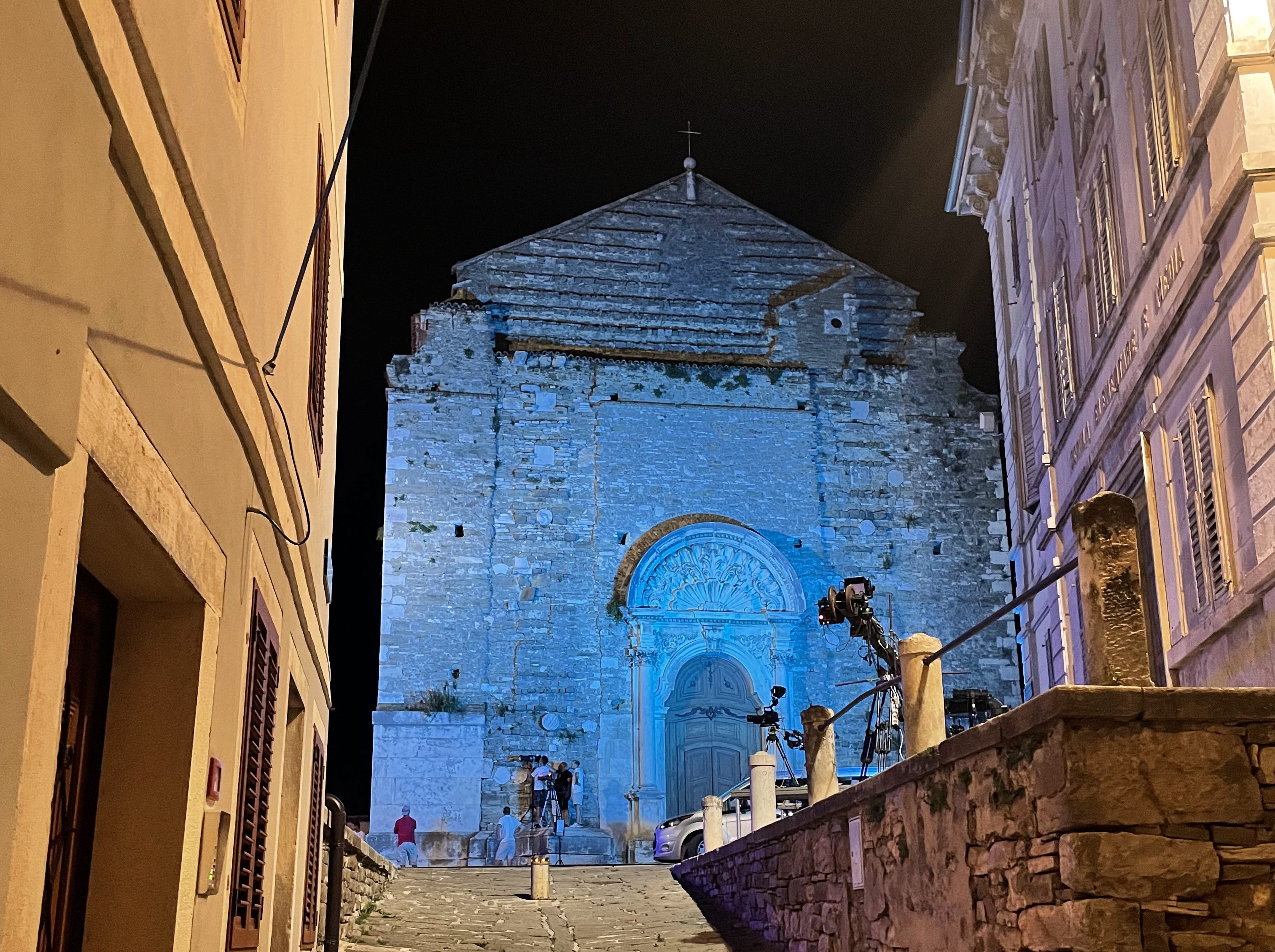
Latest first prizes of Dìmela Cantando
The festival outside Croatia
Since 2016, Dìmela Cantando has crossed the artificial frontiers that dissect the soul of our ancient lands. Born in Croatia, it soon extended its voice to Koper/Cao d’Istria and Muja - outposts where Slavic blood and Venetian memory still speak the same language. These were not mere performances, but acts of remembrance and invocation to a unity older than the nation-state.
In 2019 and 2021, Muja gave way to Sitadeła, deep in the Venetian core. Then came Venice, 2022 and 2023. Now, in 2025, the song contest will take place in Trevizo, on the 14th of June.
Cultural Impact and Future Prospects
Among events dedicated to minority languages, the Festival of Istroveneto has emerged as a leading example of cross-border cultural practice. Recent editions, especially the musical performances, have garnered tens of thousands of views on YouTube, attracting linguists and regional language enthusiasts from across Europe.
We will be there - on the 14th of June in Trevizo - to witness the event, in which each voice will affirm a Europe not of banks and treaties, but of spirit, blood, and tongue.
Voices from both sides of the Adriatic Sea shall once more reclaim what borders tried to sever; not for the amusement of the crowd, but for a meaning that few still remember. Not for mere entertainment, but for resurrection.
A Glance Beyond Nationalisms
The Festival of Istroveneto is not just a container for competitions and performances, but a cultural stronghold demonstrating that in the Upper Adriatic, linguistic dialogue matters more than nationalist rhetoric.
On one hand, Italian nationalism historically imposed the label “Italians” on communities speaking local dialects; on the other, “Yugoslav” nationalism - after the most tragic pages of the 20th century - also contributed to erasing identities that, though different, once flourished through mutual respect.
Today, the Festival of Istroveneto sends a clear message: it is not enough to call ourselves “Italians” or “Slavs.” We must reclaim our original names: Venetians, Friulians, Istrians, Dalmatians, Slovenes, and Croats who have coexisted for centuries along the thread of a dialect and a culture that no political border can truly sever.
In the future, we can only hope that all those who cherish these lands will participate in the Festival with pride, calling themselves by their true names rather than simply “Italians” - remarking once again that the plural identity of the Upper Adriatic is a shared treasure to be cultivated together.