

“L’è mejo brusar un paese che perder ‘na tradision”
It is better to burn a town, than to lose a tradition.
The Pan e Vin (‘bread and wine’ in Venetian), also known locally as Casera, Pignarul, or Burièl, is one of the most fascinating traditional holidays of Venetia. Celebrated on the night before Epiphany Day, this event retains an ancient character deeply rooted in Indo-European culture, intertwining with the history and folklore of the Venetian people.
The Celebration
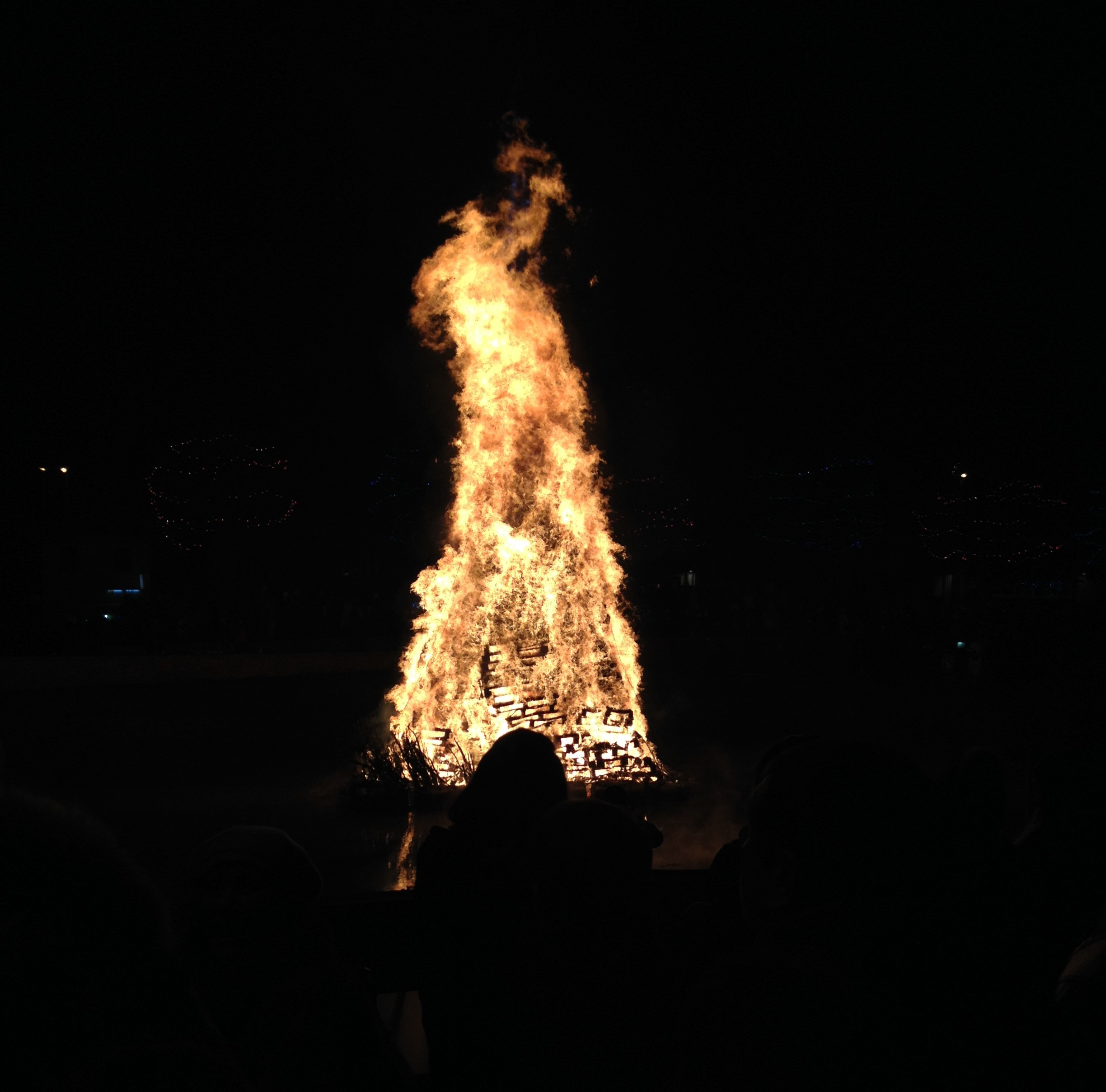
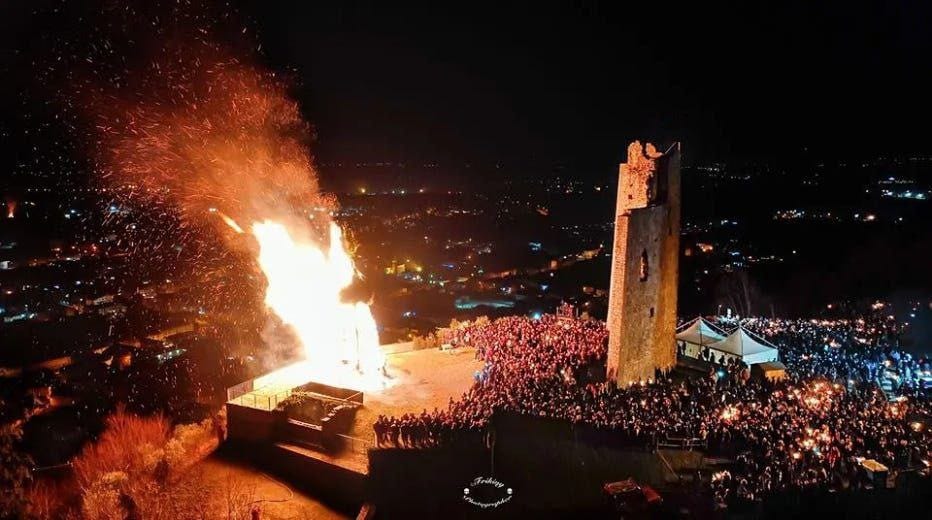
Today, the Pan e Vin festival is celebrated annually in towns and villages across Venetia, often as a communal event organized by local cultural associations. Large bonfires are prepared in open fields or town squares, where residents gather in the evening of January 5th or on the morning of Epiphany. The event begins with the lighting of the bonfire, accompanied by traditional songs, folklore performances, and storytelling that connect the celebration to its ancient roots.
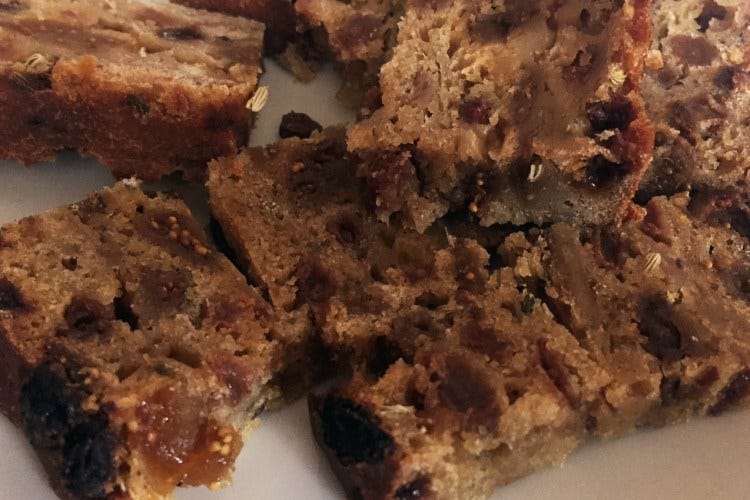
Local delicacies such as pinsa, a dense cake made with cornmeal, dried fruits, and nuts (symbolizing prosperity), and steaming cups of vin brulè (mulled wine) are shared among attendees, adding warmth to the winter chill. Children are often involved in the festivities, helping to decorate the effigy or learning about the tradition's history from their elders. In some areas, small offerings of food or symbolic items are still thrown into the fire, honoring the ritual's ancient votive origins.
In addition to its festive aspects, Pan e Vin underscores a sense of communal solidarity. Historically, it provided an opportunity for rural communities to collectively reflect on their shared aspirations for the coming year, strengthening bonds through shared labor and celebration.
Despite modern adaptations, the essence of Pan e Vin remains intact, fostering a sense of community and continuity with the past.
The Fire Ritual and the Old Woman
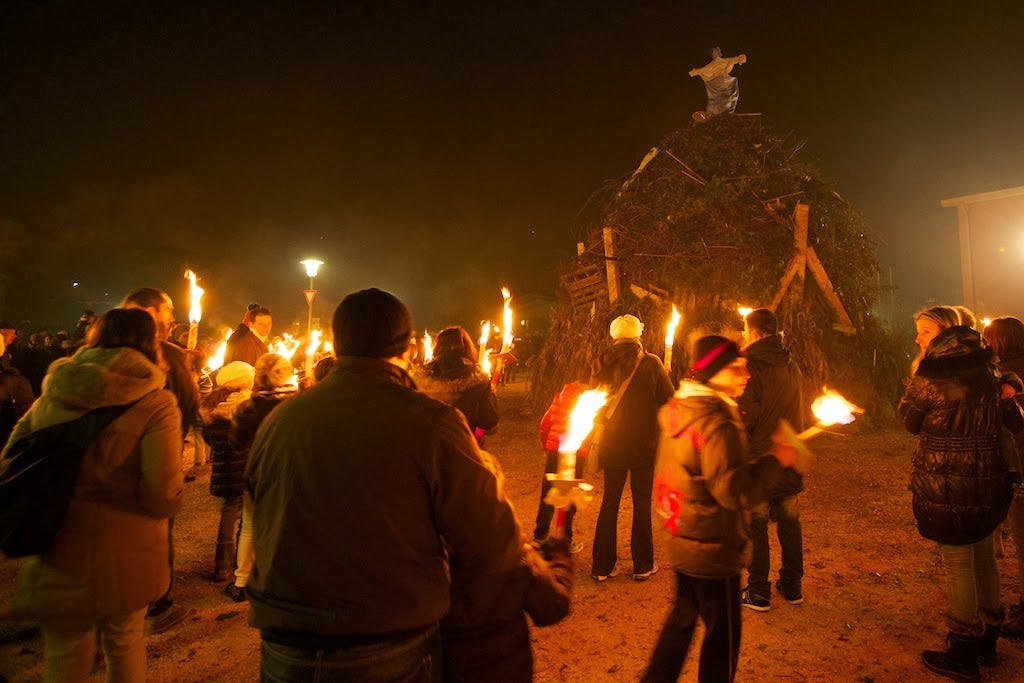
At the heart of the celebration is the lighting of a large bonfire upon which an effigy of an old woman (Vecia) is placed, symbolizing the old year.
Fire occupies a central role in Panevin celebrations, serving not only as a purifying and unifying element, but also as a communal gathering point and as a medium for divination: observing the direction of the sparks and smoke, village elders predict the agricultural prospects of the coming year. A favorable wind promises abundant harvests, while an adverse wind foretells a challenging year.
Traditional proverbs succintly express this belief:
“Se le fuische le va a matina, ciol su el saco e va a farina.”
If the sparks go east, prepare for a lean year.“Se le fuische le va a sera, polenta pien caliera.”
If the sparks go west, expect abundant harvests.
Ancient Origins and Symbolism
The Pan e Vin festival dates back to Indo-European traditions tied to fire worship and seasonal cycles. In ancient times, fire was seen as the gateway to the afterlife, and the effigy burnt in the bonfire symbolised the nocturnal goddess who, at the winter solstice, transformed into her daytime form to illuminate the world. The Ancient Veneti, like other Indo-European peoples, marked the transition of season with fire rituals and, in the case of Pan e Vin, celebrating the gradual return of sunlight.
With the advent of Christianity, Panevin was assimilated into the liturgical calendar, aligning with the Feast of the Epiphany. The bonfires were reinterpreted as guiding lights for the Magi on their journey to Bethlehem.
However, the tradition retains pre-Christian elements. The effigy burned during Pan e Vin is tied to figures such as the Vecia Veneta, the Redodesa, or the Marantega, which in turn harken back to the ancient deity of Reitia, a goddess venerated by the Ancient Veneti. The very etymology of Marantega (Mater Antiqua, “the ancient mother”) represents an archetype of the earth as it enters its dormant phase during winter.
Her eventual "death" - symbolized by her burning in rituals like the Pan e Vin - signifies the purification and rebirth of the land, ensuring fertility for the coming year. The act of burning a female effigy and offering food to the fire (seeds, meat, drinks) mirrors millennia-old rituals documented even during the Romanization period.
The Old Mother also embodies the waning year and her ritual destruction paves the way for spring and the promise of new life. Similarly, her consort, Arlecchino (Harlequin), emerges as a symbol of chaos and renewal, bridging the darkness of winter with the vitality of the forthcoming Carnival.
Connections to Other Traditions
The Pan e Vin festival shares similarities with other regional celebrations. In Emilia, for example, the Fasagna involves the burning of a male effigy, a likely sign of its Celtic origin. Similarly, solstice celebrations found in various Indo-European cultures - like the Nodfyr or the Notfeuer - reflect a shared vision of fire as a purifying and regenerative element.
The Tradition Endures
Despite recent attempts by authorities to impose restrictions on the festival (ostensibly due to environmental concerns), the tradition of Pan e Vin continues to be celebrated and cherished by Venetians every year—not only in Venetia but also in Venetian communities in Southern Brazil, such as Bento Gonçalves and Venda Nova do Imigrante, among others.
Its persistence within Venetian communities lies in its ability to connect modern Venetians with their ancestral heritage while providing a moment of joy and reflection in the depths of winter.
The staff of The Third Venetia wishes you all happy new year.
Strabel artìgol.