

The municipal elections in Venice are followed closely throughout both the Venetian and Italian worlds because of the city’s enormous impact on the economy and its international visibility. One could argue that the power held by the mayor of Venice is comparable to that of the governor of Veneto when weighing its functions and potentially exercisable influence.
Voting will take place on 24–25 May 2026, within the broader context of the Italian local elections involving 666 municipalities. These elections are a battle for the control of an extremely complex urban-administrative ecosystem, where real power no longer coincides solely with Ca’ Farsetti, the city hall, but is distributed among public companies, infrastructure, foundations, tourism, urban planning, and territorial economic networks.
After ten years of government under Luigi Brugnaro, the city faces a delicate transition. The “Brugnaro model” — entrepreneurial civic politics, strong vertical decision-making, centrality of publicly controlled companies, and managerial administration of urban assets — has redefined Venetian society.
Candidates
The centre-right candidate, Simone Venturini, represents the continuity of this system. An outgoing councillor and insider of the Brugnaro era, Venturini inherits not only a political coalition, but also a consolidated administrative structure that includes relationships with publicly controlled companies, economic categories, the tourism system, and the management of major urban dossiers. His civic list is supported by Lega, Brothers of Italy, Forza Italia, Union of the Centre, and the Party of the Venetians.
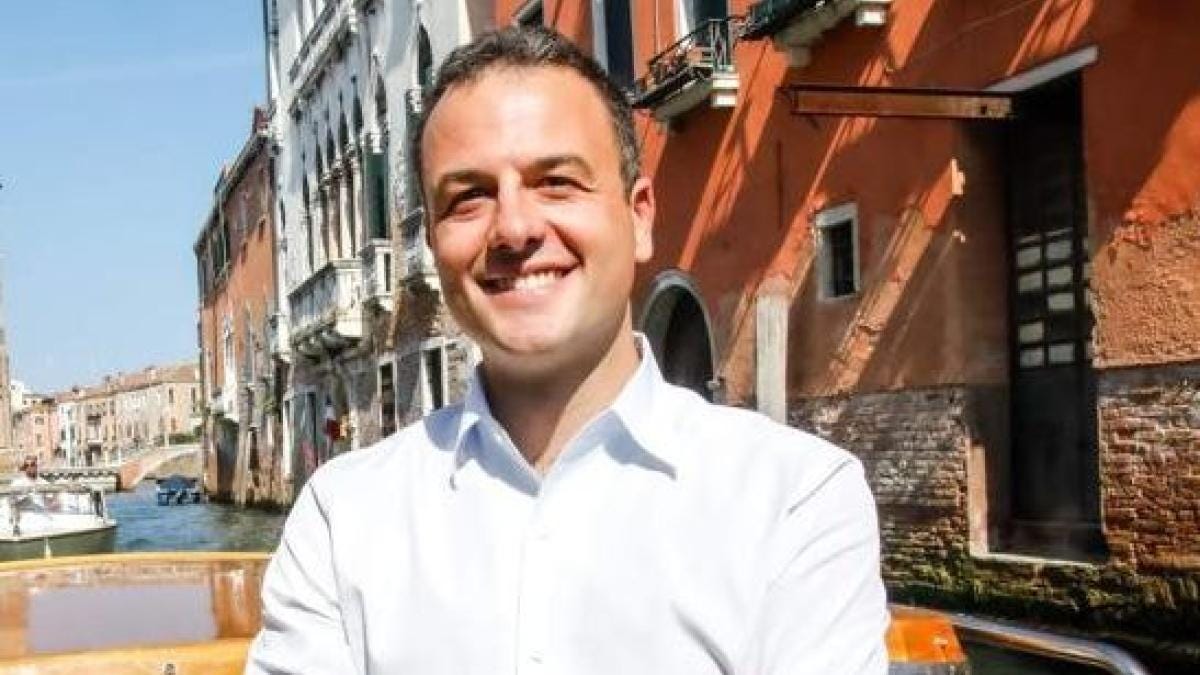
His main electoral strength remains Mestre and the productive mainland, that is, the part of the municipality that in recent years has perceived the outgoing administration as pragmatic and efficient. However, Venturini also inherits all the critical issues of the Brugnaro era: overtourism, depopulation of the historic city, urban planning tensions, and the political weight of the “Palude” investigation, which continues to weigh on the public image of the outgoing administrative bloc.
On the opposite side, Andrea Martella is attempting to build a broad and transversal alternative coalition. A Democratic Party senator and former undersecretary, he has assembled the so-called “broad camp”: the Democratic Party, Five Star Movement, Green-Left Alliance, Volt Veneto, and various civic lists.
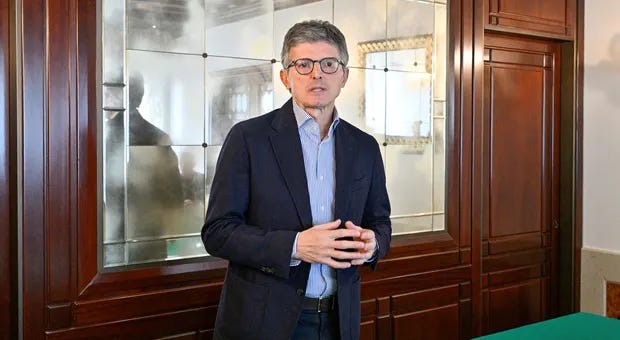
Martella’s strategy is twofold. On the one hand, he seeks to transform the vote into a referendum on the post-Brugnaro era; on the other, to expand the urban electoral base as much as possible through a highly segmented campaign. In this context, the strong focus on the immigrant vote — especially in Mestre and Marghera — must also be understood, with candidates of foreign origin included in the lists and multilingual campaign material dedicated to the main communities present within the municipality.
On one side, this is a pragmatic choice that exploits the ethnic composition of contemporary Venice; on the other, it is also an acknowledgement that these communities live and think as autonomous organisms with which political compromises must be reached, the opposite of what integration should theoretically represent.
Alongside the two main poles are several other candidacies. This is politically indicative of Venetian fragmentation because all forecasts suggest a neck-and-neck race between the two principal coalitions, meaning that the absence of agreements with smaller parties could prove fatal to the victory of either bloc.
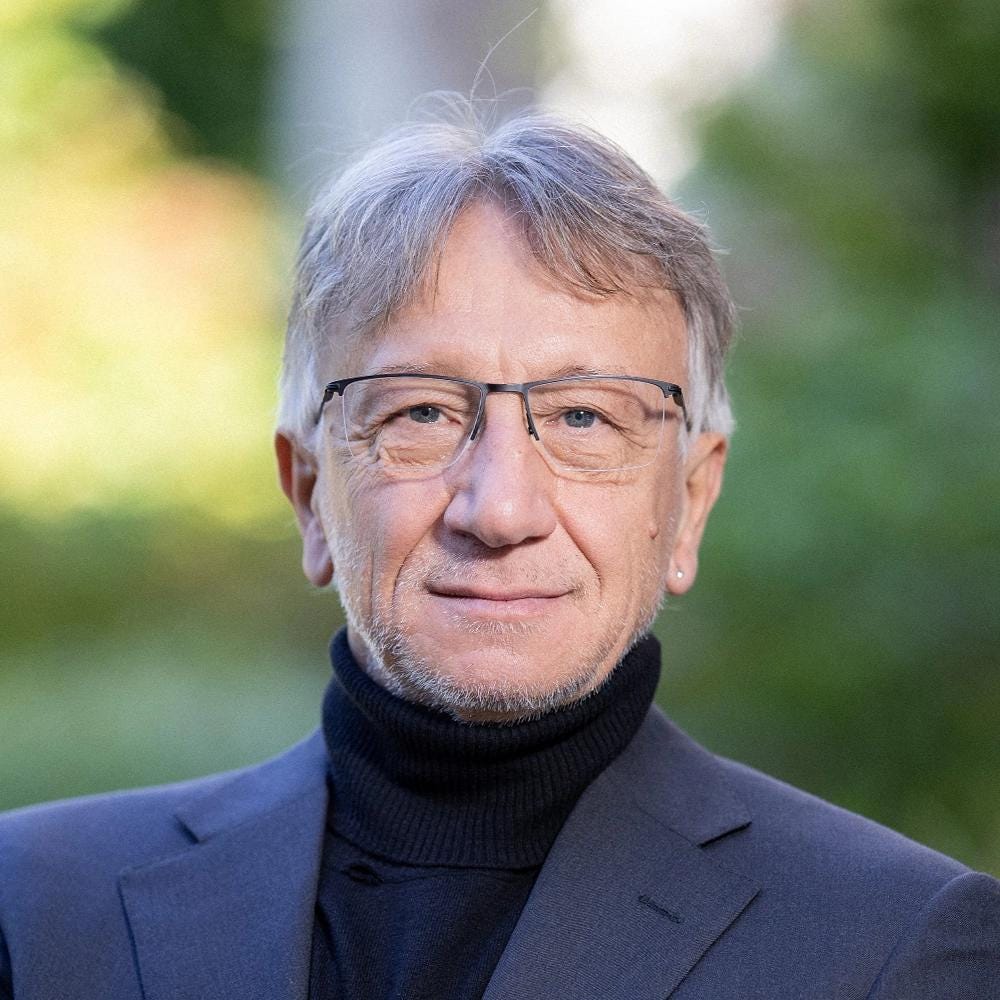
Michele Boldrin represents the most atypical element of the competition. A liberal economist, university professor in the United States, and founder of the “Ora!” movement, he appeals to a technocratic, liberal-reformist, and anti-party electorate. His candidacy speaks above all to educated urban classes and to a section of the productive world dissatisfied both with centre-right populism and with the traditional progressivism of the centre-left.
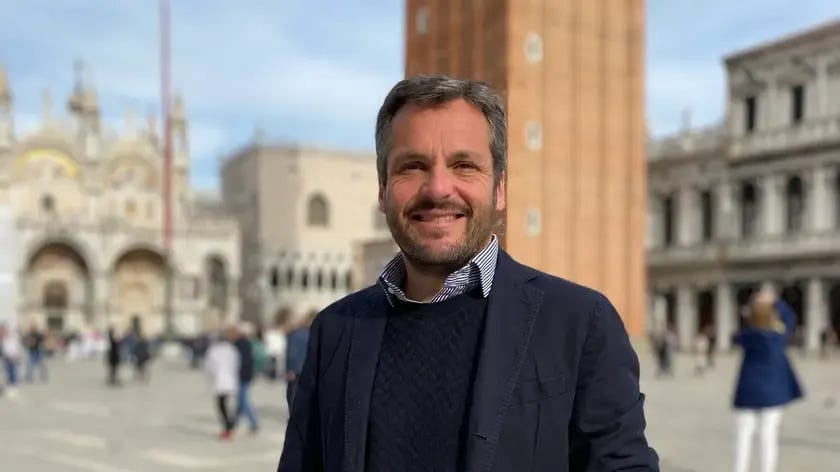
Claudio Vernier, representing the civic list Città Vive and Volt Veneto, comes from the world of Venetian commerce and economic associations. He has built his campaign around urban security, the economic revival of the historic city, and the defence of traditional businesses placed under pressure by mass tourism and the commercial transformation of Venice.
Particularly interesting not only on the local but also on the regional political level is the situation of the Venetian identitarian area. The Venetianist vote appears heavily divided, not only in Venice but also in other Veneto cities voting in 2026. In Venice, candidates such as Roberto Agirmo and Pierangelo Del Zotto exemplify this fragmentation.
This fragmentation places particular strain on the political project of Resistere Veneto, which was created to build a unified territorial identitarian container capable of regrouping the autonomist electorate dispersed after the national transformation of the Lega. Only six months after the regional elections, the 2026 municipal elections instead reveal a landscape that remains extremely fragmented, personalised, and localised, without any truly hegemonic leadership within the Venetianist area.

A special case is that of Luigi Corò, who had attempted to place himself within the orbit of Roberto Vannacci and the national sovereigntist-identitarian area. However, Corò was effectively disowned by the official Vannacci movement, which appears oriented toward avoiding dispersion in local administrative contests and instead concentrating directly on building a political presence for future national and European elections.
More deeply rooted in the Venetian civic tradition is the candidacy of Giovanni Andrea Martini, close to citizens’ committees, battles over residential depopulation, and criticism of tourism monoculture. His electoral weight will probably remain limited, but he continues to represent a significant portion of public opinion in the historic centre.
The System of Publicly Controlled Companies
Whoever wins, on 26 May they will inherit a city where real power is distributed across a multilayered network.
It is not only the mayor and the city council that matter. In Venice, real power is distributed around a series of infrastructures and companies that manage essential functions of the city and which often possess a longer time horizon than individual administrations.
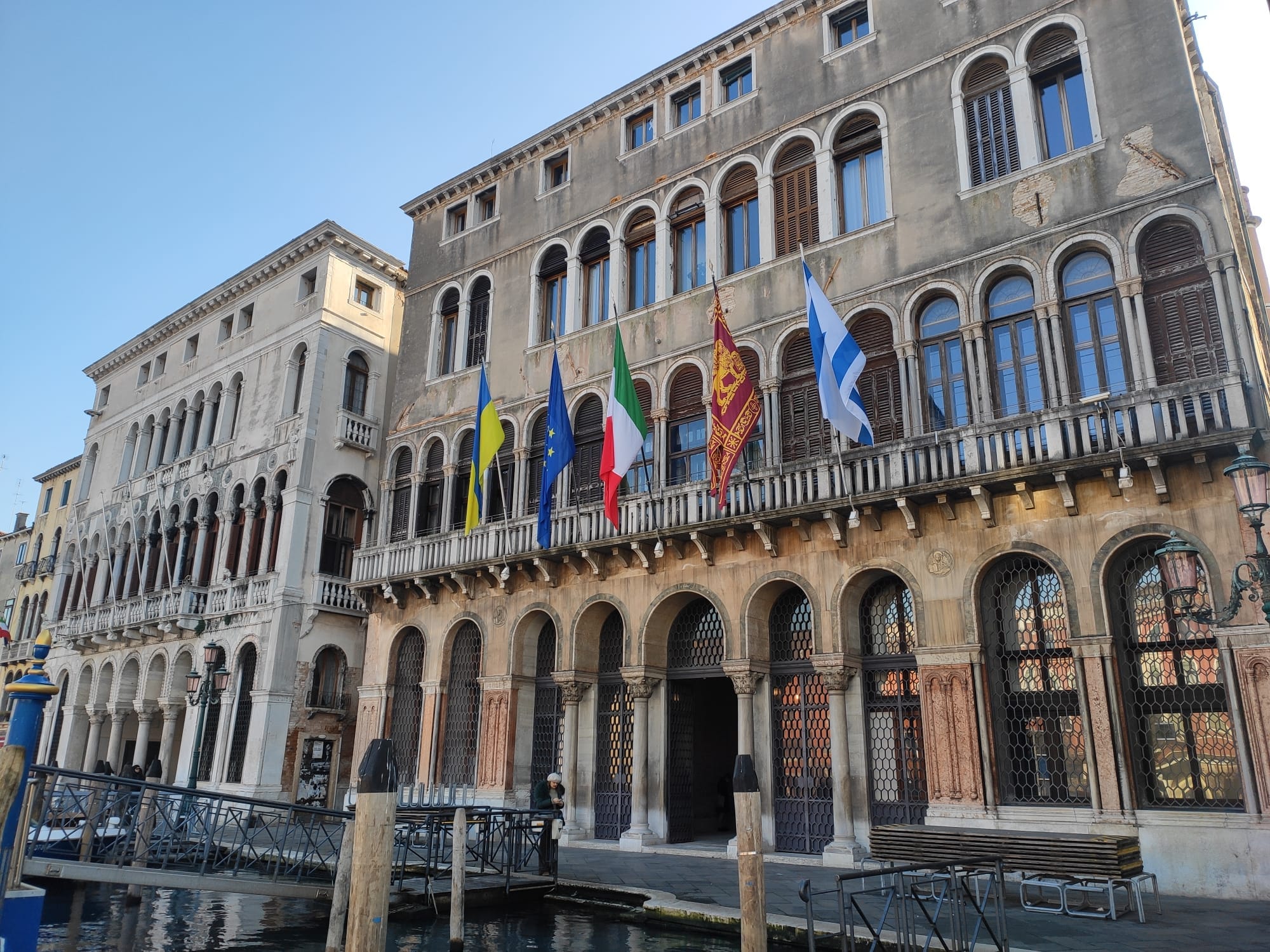
The first centre of power is the AVM/ACTV/VE.LA. system.
Formally, these are publicly controlled municipal companies, but substantively they constitute the city’s daily operational machine. AVM controls local public transport through ACTV and commercial, promotional, and tourism-related activities through VE.LA.
This means that the group does not merely manage buses and vaporetto waterbuses: it controls tourist flows, ticketing, city events, promotional campaigns, access systems, information services, and part of Venice’s public image.
In a city where tourism is the principal industry, whoever governs mobility also governs the urban economy. The management of water routes, terminals, tariffs, and the accessibility of the city produces enormous power over residents, commuters, economic operators, and visitors. Furthermore, public transport concessions are structured over long time horizons — the document cites the 2023–2032 period — making the system relatively autonomous from immediate political turnover.
SAVE and the Tessera Airport System
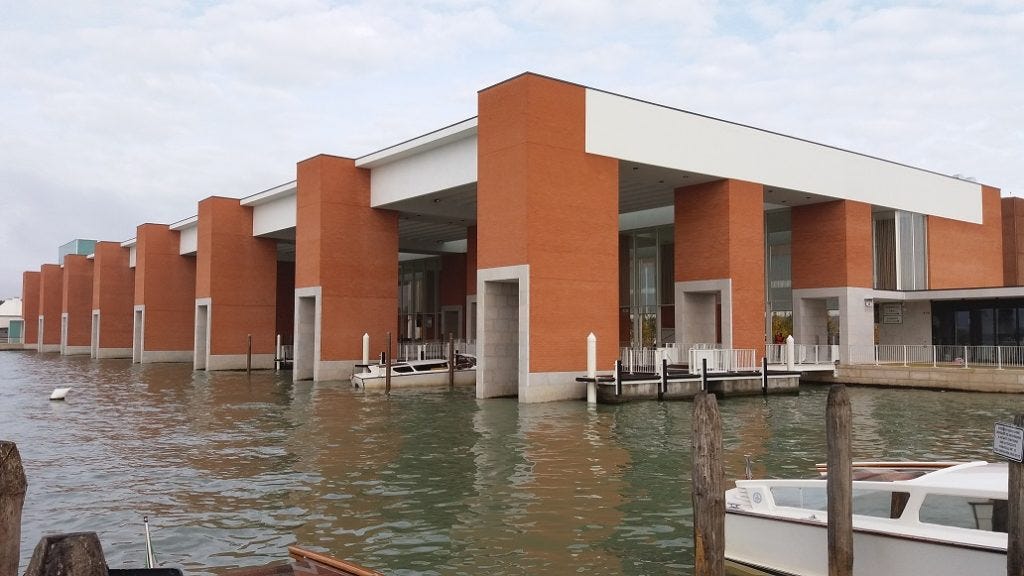
Marco Polo Airport is not merely a transport infrastructure: it is the city’s principal international gateway and a node that directly influences tourism, investment, the property market, and urban development across the entire northern area of Mestre.
Most of the new infrastructures of the Venice metropolitan area are currently being developed near the airport, including the Bosco dello Sport project. SAVE SpA manages the airports of Venice and Treviso and also controls those of Verona and Brescia, as well as part of Charleroi Airport in Belgium. In other words, it is the airport hub of Venetia.
The third centre of power is represented by the Port of Venice and above all by Porto Marghera. It does not depend directly on the municipality, but on the Northern Adriatic Sea Port Authority, an autonomous body that manages concessions, terminals, port planning, and logistical development.
To the sixteen port authorities scattered along the Italian coasts was added in 2025 Porti d’Italia SpA, a public company owned by the ministries of economic development and infrastructure, which will manage the most important infrastructural projects. This reform has been highly controversial because it has effectively centralised strategic decisions concerning the future of Italian ports within the central government.
This creates a peculiar situation: the mayor of Venice has enormous political exposure regarding the industrial and environmental issues of Marghera, yet real operational control is distributed among the Port Authority, ministries, the Veneto Region, logistics operators, and private concessionaires.
The issue of environmental remediation in the Nuovo Petrolchimico and Fusina areas also operates within this multilayered logic, where public financial flows and future industrial destinations can redefine enormous portions of territorial value.
MOSE and the New Venice Lagoon Authority
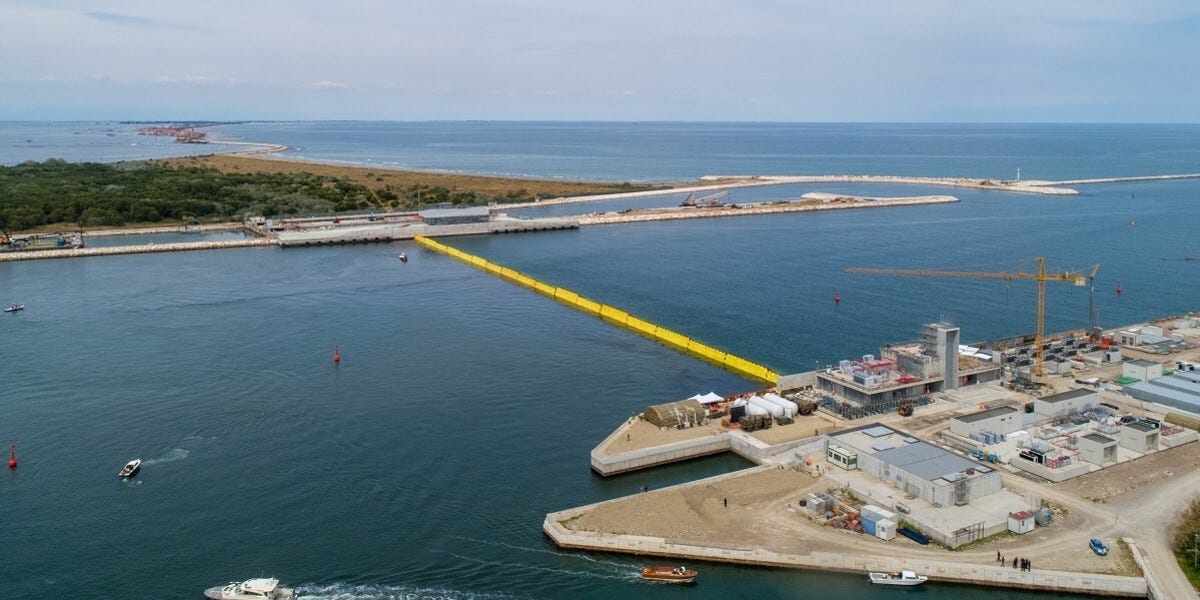
Here, what is likely to become one of the future principal centres of Venetian technical-administrative power is taking shape.
After the crisis of the Consorzio Venezia Nuova, the Italian state is progressively transferring functions, management, and operational capacity to the new Lagoon Authority. MOSE — the system of flood barriers regulating lagoon water levels and preventing new flooding in Venice — requires permanent maintenance with extremely high costs.
Whoever governs the MOSE system indirectly governs the physical future of the city. They also govern an enormous future mass of public expenditure linked to the ordinary and extraordinary maintenance of the barriers, canals, and the security of the city itself.
Finally, there is the local media system, probably underestimated in public debate but central to the construction of urban consensus.
NEM controls La Nuova Venezia, one of the principal information sources of the metropolitan city. The peculiarity of NEM lies in its ownership structure: entrepreneurs, foundations, and financial groups from the North-East, with Enrico Marchi serving as president and architect of the creation of this media pole. The Venetian information system moves within the same relational environments that govern infrastructure, finance, and territorial development across the North-East.
Alongside NEM, Il Gazzettino also remains influential, while television channels such as Antenna Tre and Rete Veneta continue to play a significant role in the political narrative of the region.
The real functioning of contemporary Venice depends on the control of the publicly controlled companies and their strong territorial ramification. This ecosystem — even more than the city council itself — determines the effective distribution of contemporary Venetian power: an intertwining of public companies, infrastructure, concessions, global tourism, and territorial economic networks.
It is there that real power will continue to be played out, regardless of the electoral result.